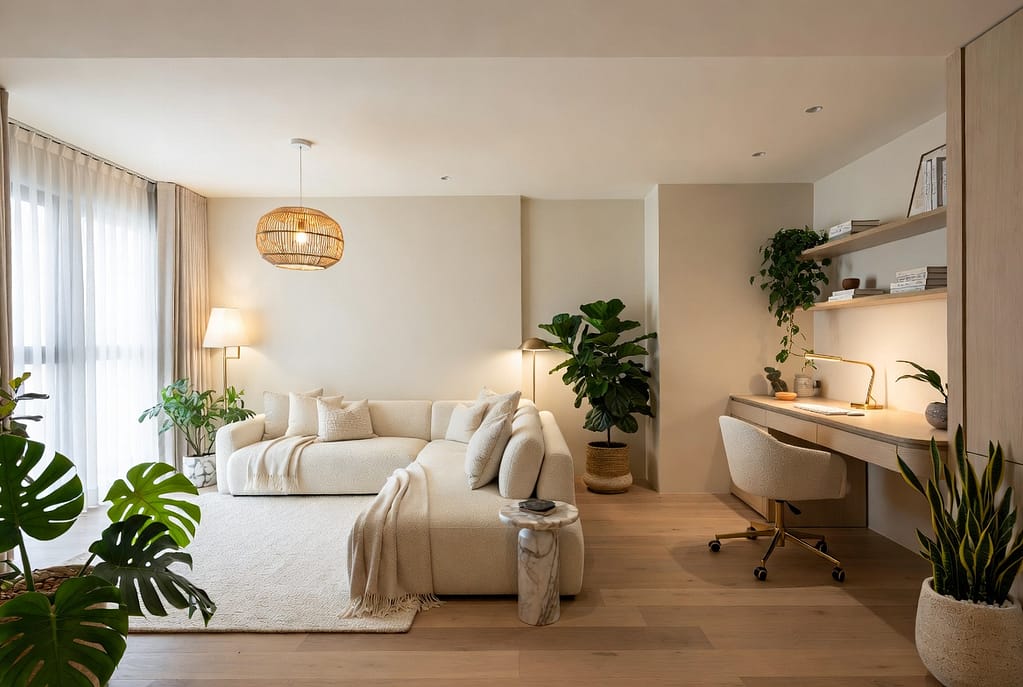
As urban living continues to evolve, home renovation trends in Singapore are shifting toward smarter, more adaptable, and wellness-focused spaces. In 2026, it’s no longer just about making your home look good—it’s about creating an environment that supports your lifestyle, maximizes space, and withstands the tropical climate.
Whether you’re renovating a new condo, an HDB flat, or upgrading a resale property, here are the key renovation trends every Singapore homeowner should know in 2026.
1. Multi-Functional Spaces Are the New Standard
With more people working and spending time at home, spaces are expected to serve multiple purposes.
In 2026, homeowners are embracing:
- Living rooms that double as home offices
- Bedrooms with built-in study or wellness corners
- Dining areas that transform into workspaces
Flexible furniture, sliding partitions, and modular layouts are becoming essential to maximize limited space—especially in condos and HDB flats.
2. Warm Minimalism Replaces Cold Interiors
Minimalism is evolving. Instead of stark white and ultra-modern designs, 2026 is all about “warm minimalism.”
This trend focuses on:
- Soft neutral tones (beige, cream, warm grey)
- Natural materials like wood, linen, and stone
- Cozy textures that make spaces feel inviting
The goal is to create a clean yet comfortable environment that feels like home—not a showroom.
3. Smart Home Integration Becomes Essential
Technology is no longer a luxury—it’s expected.
Popular smart upgrades include:
- Smart lighting and climate control
- Digital locks and security systems
- Voice-controlled appliances
- Automated blinds and curtains
In Singapore’s fast-paced lifestyle, smart homes offer convenience, energy efficiency, and enhanced security.
4. Climate-Responsive Materials Take Priority
Given Singapore’s heat and humidity, material selection is more important than ever.
In 2026, homeowners are prioritizing:
- Moisture-resistant cabinetry and finishes
- Anti-mold paints
- Durable, low-maintenance surfaces like quartz and tiles
- UV-resistant materials for sun-exposed areas
These choices not only improve durability but also reduce long-term maintenance costs.
5. Built-In Storage for Clutter-Free Living
With limited space in most Singapore homes, smart storage solutions are a must.
Trending ideas include:
- Full-height built-in cabinets
- Hidden storage compartments
- Platform beds with storage
- Multi-purpose furniture
The focus is on keeping homes organized without compromising design.
6. Wellness-Centered Design
Homes are becoming personal sanctuaries.
In 2026, wellness-focused features include:
- Better natural lighting and ventilation
- Indoor plants and biophilic design elements
- Quiet corners for relaxation or meditation
- Use of calming colors and materials
These elements help reduce stress and improve overall well-being—especially important in dense urban environments.
7. Open Yet Zoned Layouts
While open-concept living remains popular, there is a shift toward “zoned openness.”
Instead of fully open spaces, homeowners are using:
- Glass partitions
- Sliding doors
- Wooden screens
- Strategic lighting and rugs
This allows for privacy and functionality without sacrificing spaciousness.
8. Sustainable and Eco-Friendly Choices
Sustainability is becoming a key consideration in renovation decisions.
Homeowners are opting for:
- Energy-efficient appliances
- Eco-friendly materials
- Low-VOC paints
- Long-lasting, durable finishes
Green living is not just a trend—it’s a long-term investment.
9. Statement Lighting and Subtle Luxury
Lighting is now a design feature, not just a necessity.
Popular choices include:
- Pendant lights over dining areas
- Cove lighting for ambiance
- Sculptural or designer fixtures
Combined with subtle luxury elements like textured walls or premium finishes, these details elevate the overall look without overwhelming the space.
Final Thoughts
Home renovation trends in Singapore for 2026 reflect a deeper shift in how people live. It’s about creating spaces that are flexible, comfortable, and future-ready—while still being stylish and practical.
By embracing these trends, homeowners can design spaces that not only look modern but also enhance daily living in meaningful ways. A well-renovated home isn’t just visually appealing—it’s a space that truly works for you.