Renovating your home is one of the biggest investments you’ll make after purchasing a property. Whether you’ve just collected the keys to your new BTO, purchased a resale HDB flat, or own a condominium in Singapore, choosing the right renovation approach can significantly impact your budget, timeline, and overall experience.
One of the most common questions homeowners ask is:
Should I choose a Design & Build company or follow the traditional renovation process?
While both approaches can deliver beautiful homes, they differ greatly in how projects are managed. Understanding these differences can help you avoid unnecessary delays, unexpected costs, and communication issues.
In this guide, we’ll compare both renovation models and explain why more Singapore homeowners are choosing the Design & Build approach.
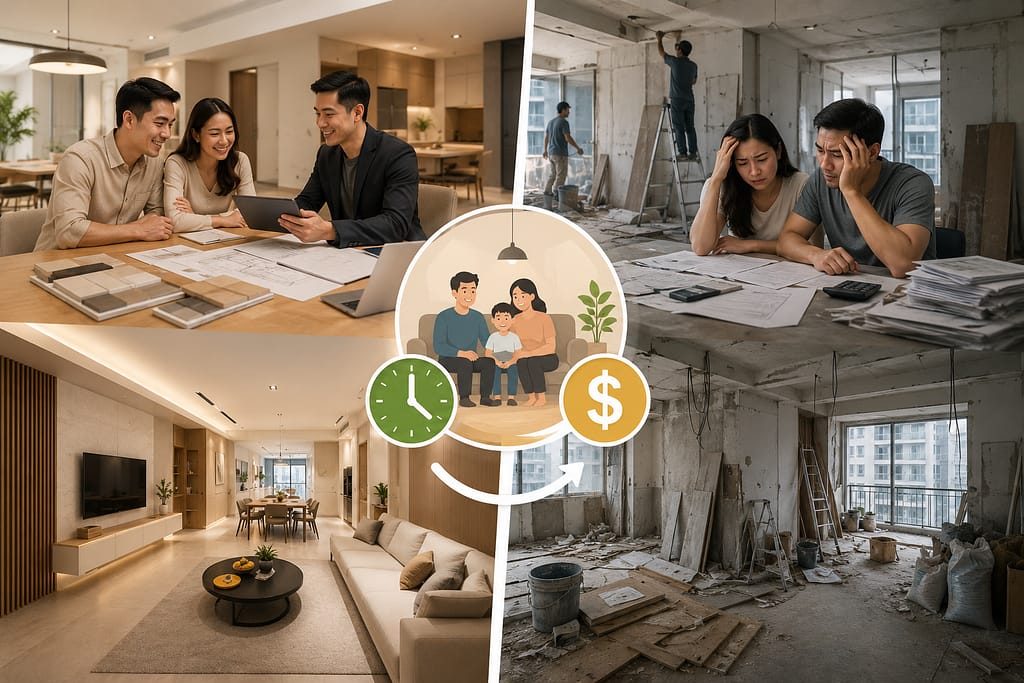
What Is Traditional Renovation?
In a traditional renovation model, different parties handle different stages of your project.
A typical process looks like this:
- Homeowner
- Interior Designer (ID)
- Main Contractor
- Various Subcontractors
- Carpentry Workshop
- Electricians
- Plumbers
- Painters
- Glass & Aluminium Suppliers
Each party focuses on its own scope of work, and communication often passes through several layers before reaching the people performing the actual work.
While this model has been widely used for many years, it can become increasingly complex as renovation projects grow larger.
What Is Design & Build?
A Design & Build company combines design, project management, and construction under one roof.
Instead of coordinating multiple companies, homeowners work with a single team responsible for the entire renovation journey.
A typical Design & Build process includes:
- Space Planning
- Interior Design Consultation
- 3D Visualisation
- Material Selection
- Detailed Carpentry Drawings
- Renovation Works
- Project Management
- Final Handover
This integrated workflow allows every stage to be planned together from the beginning, reducing miscommunication and improving efficiency.
Comparison: Design & Build vs Traditional Renovation
1. Communication
Traditional Renovation
When different companies are involved, information often passes through multiple people before reaching the site team.
For example:
Homeowner → Interior Designer → Main Contractor → Carpenter
If changes are made during construction, every party must be informed. Even a small misunderstanding can result in delays or costly rework.
Design & Build
With a Design & Build company, you communicate with one dedicated team throughout the project.
Designers, project managers, and carpentry specialists work closely together, ensuring everyone follows the same plan.
Winner: Design & Build
2. Project Timeline
Time is valuable, especially for homeowners eager to move into their new home.
Traditional Renovation
Since each contractor works independently, scheduling often depends on the availability of multiple teams.
If one trade finishes late, the next trade may need to be rescheduled, causing a domino effect that extends the renovation timeline.
Design & Build
An integrated team plans the entire renovation schedule from day one.
Because design, carpentry, electrical work, painting, and installation are coordinated internally, projects typically progress more smoothly with fewer interruptions.
Winner: Design & Build
3. Budget Control
Budget overruns are one of the biggest concerns for homeowners.
Traditional Renovation
It is common for additional costs to appear during construction when design details have not been fully coordinated.
Examples include:
- Extra carpentry changes
- Electrical point revisions
- Material upgrades
- Variation orders
These adjustments can quickly increase the overall renovation cost.
Design & Build
A comprehensive planning process helps identify most requirements before work begins.
Detailed drawings, material confirmation, and accurate measurements reduce the likelihood of unexpected expenses.
Homeowners benefit from greater cost transparency and improved budget control.
Winner: Design & Build
4. Quality Control
Maintaining consistent workmanship requires close coordination between design and construction.
Traditional Renovation
When different contractors work independently, responsibility can sometimes become unclear if issues arise.
For example, a cabinet may not fit perfectly because measurements were taken before wall finishing was completed.
Resolving these issues may involve multiple parties.
Design & Build
An integrated team oversees the project from concept to completion.
Since everyone follows the same construction drawings and quality standards, potential issues can often be identified and resolved much earlier.
Winner: Design & Build
5. After-Sales Support
Renovation doesn’t always end on handover day.
Minor adjustments may be required after moving in.
Traditional Renovation
If something needs repair, homeowners may need to determine which contractor is responsible before arranging rectification.
Design & Build
You simply contact your renovation company, and the project team coordinates the necessary follow-up.
Having a single point of contact makes after-sales support much more convenient.
Winner: Design & Build

Which Renovation Model Costs Less?
Many homeowners assume that hiring multiple contractors separately will always save money.
However, this isn’t necessarily true.
While individual quotations may appear lower, coordinating different suppliers yourself can lead to:
- Design inconsistencies
- Longer renovation periods
- Rework due to communication gaps
- Additional transportation and coordination costs
- More variation orders
A well-managed Design & Build project often delivers better overall value because the planning process reduces costly mistakes and improves project efficiency.
The lowest quotation doesn’t always result in the lowest final cost.
Who Should Choose Design & Build?
A Design & Build solution is particularly suitable if you:
- Have a busy work schedule
- Want one company to manage the entire renovation
- Prefer a clear and transparent process
- Value consistent workmanship
- Want better control over your renovation budget
- Need customised carpentry solutions
- Are renovating a BTO, resale HDB, condominium, or landed property
The Renovation Journey Should Be Stress-Free
Your renovation experience shouldn’t involve coordinating multiple contractors, chasing updates, or worrying about unexpected costs.
Choosing a Design & Build company means your designer, project manager, and renovation team work together from the very beginning.
With proper planning, clear communication, and integrated project management, homeowners can enjoy a smoother renovation journey while saving valuable time and avoiding unnecessary stress.
Ready to Start Your Renovation?
Whether you’re renovating a new BTO, upgrading a resale HDB, or transforming your condominium, choosing the right renovation partner is just as important as choosing the right design.
At SG Living Hub, we provide a complete Design & Build solution—from initial consultation and 3D visualisation to custom carpentry, renovation works, and final handover.
If you’re looking for a renovation experience that’s transparent, efficient, and professionally managed, our team is here to help.
Book a free consultation today and discover how a well-planned Design & Build approach can bring your dream home to life.
👉 Request a free consultation and quotation:
https://www.sglivinghub.sg/get-free-quote/