Most renovation guides give you a checklist.
Collect your keys.
Find an interior designer.
Choose your materials.
Start renovation.
Move in.
While technically correct, this approach misses one important fact:
A renovation doesn’t fail because homeowners forget a step. It fails because they do the right things in the wrong order.
After working with hundreds of homeowners, we’ve noticed a common pattern. Budget overruns, project delays, and unexpected variation orders rarely happen because people make poor design choices—they happen because decisions are made too late.
This guide focuses on something different: the decision timeline.
If you make the right decisions at the right stage, you’ll enjoy a smoother renovation, fewer surprises, and potentially save thousands of dollars.
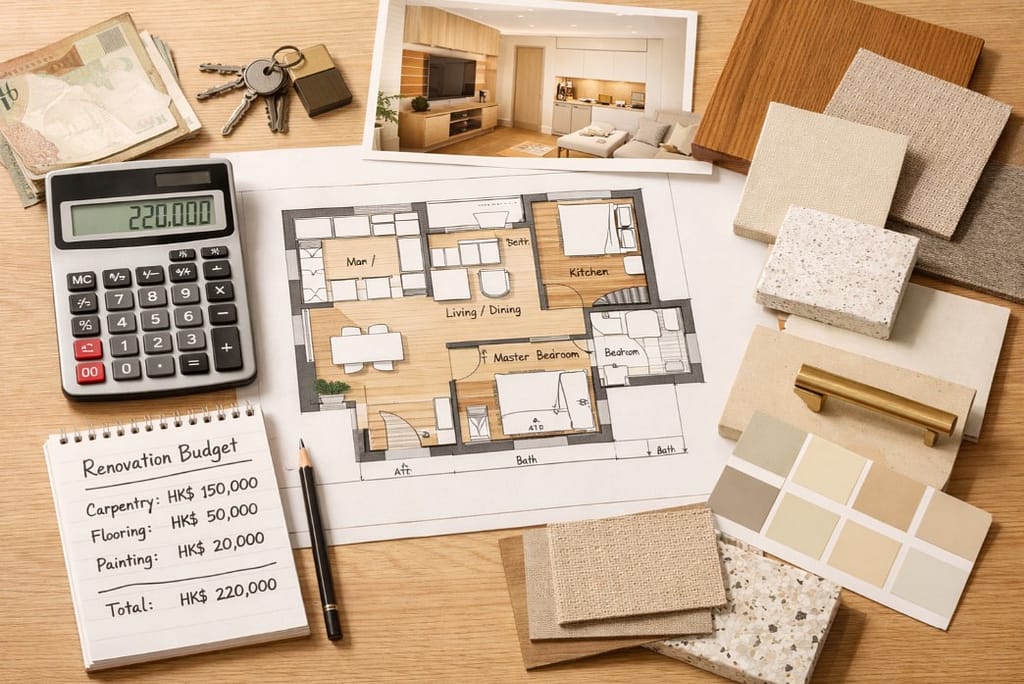
Stage 1 — Before You Even Contact a Renovation Company
Many homeowners immediately start browsing XiaoHongShu or social media for inspiration.
There’s nothing wrong with that—but inspiration isn’t a renovation plan.
Before looking at design styles, ask yourself these questions:
- How long do you plan to live in this home?
- Is storage more important than aesthetics?
- Do you work from home?
- Will your family grow in the next five years?
- Do you need elderly-friendly features?
The best renovation is designed around your lifestyle—not around the latest trend.
Stage 2 — Design Your Daily Routine, Not Just Your Interior
This is where many renovation projects go wrong.
People spend hours choosing laminate colours but only minutes thinking about how they actually live.
Instead, imagine a normal weekday.
Ask yourself:
- Where do you drop your keys?
- Where do shoes pile up?
- How many people cook together?
- Is there enough charging space beside the sofa?
- Can your robot vacuum clean under your furniture?
- Where do guests leave their bags?
A beautiful home that doesn’t support your daily routine quickly becomes inconvenient.
Good interior design solves problems before decorating spaces.
Stage 3 — Lock Down Your Electrical Plan Before Carpentry
One of the most expensive late-stage changes is electrical work.
Every additional socket, light switch, LED strip, or appliance point added after carpentry begins usually means extra labour and additional costs.
Before production starts, confirm:
- TV and internet locations
- Kitchen appliances
- Coffee machines
- Water purifier
- Robot vacuum dock
- Study desk power points
- Bedside charging locations
Think of electrical planning as the invisible foundation of a comfortable home.
Stage 4 — Build Storage for Tomorrow, Not Just Today
Many homeowners only design storage around what they currently own.
But homes evolve.
Children grow.
Hobbies change.
Appliances become larger.
A better approach is to reserve approximately 20% of your storage for future needs.
Empty cabinets today often become valuable storage two years later.
Planning ahead is much cheaper than rebuilding cabinets after moving in.
Stage 5 — Choose Materials Based on Maintenance, Not the Showroom
Every material looks beautiful under showroom lighting.
Real life is different.
Singapore’s humidity, cooking habits, and daily cleaning routines affect how materials perform over time.
When choosing finishes, consider:
- Will fingerprints show easily?
- Is it resistant to moisture?
- Can scratches be repaired?
- Is it easy to clean?
- Will it still look good after five years?
The lowest-maintenance material is often the best long-term investment.
Stage 6 — Don’t Rush Production
Once carpentry enters production, changes become expensive.
Take one extra day to review:
- Cabinet dimensions
- Door swing direction
- Shelf heights
- Handle positions
- Internal accessories
- Appliance measurements
A careful review now prevents costly modifications later.
Remember:
Measure twice. Build once.
Stage 7 — Inspect Like You’ll Live Here
During handover, many homeowners only look for visible scratches.
Instead, test everything.
Open every cabinet door.
Close every drawer.
Switch every light.
Turn on every tap.
Check silicone finishing.
Test soft-closing hinges.
Inspect edge banding.
Run your hands along every countertop.
Small issues are easiest to fix before final acceptance.
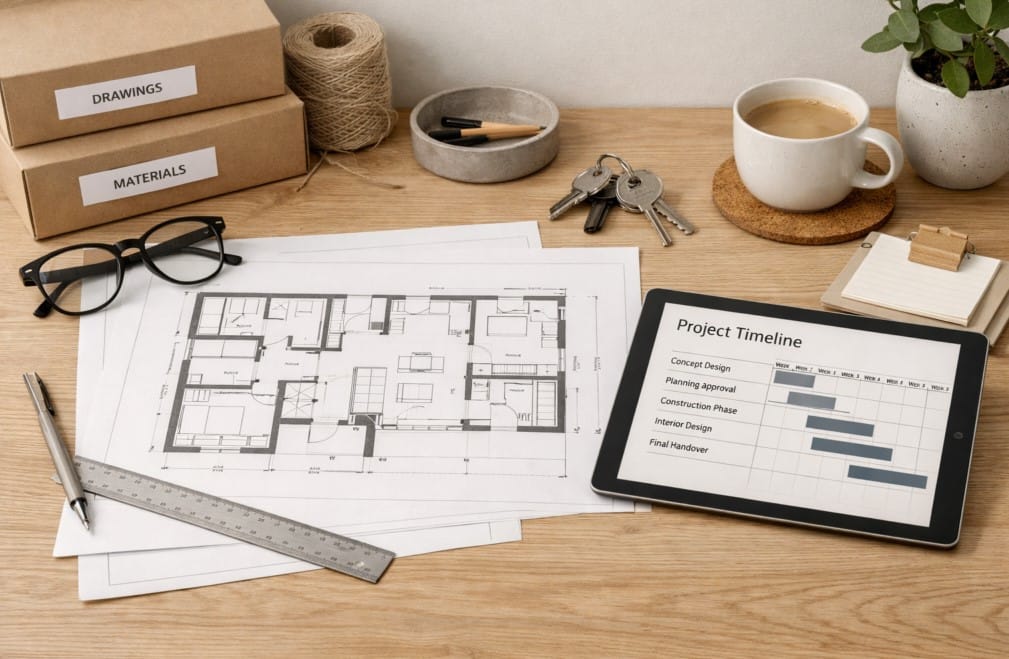
Stage 8 — The First Month After Moving In
Your renovation isn’t truly finished on handover day.
The first month reveals how well your home actually functions.
Take notes.
Do you need more hooks?
Are some shelves too high?
Is lighting sufficient?
Does the kitchen workflow feel natural?
Would another drawer be more useful than another shelf?
These observations become valuable improvements if you renovate another property—or even when adding future custom carpentry.
The Biggest Renovation Mistake Isn’t Overspending
Many people believe the biggest renovation mistake is exceeding the budget.
In reality, it’s making irreversible decisions too early—or delaying important decisions until construction has already started.
A successful renovation follows a simple principle:
Think early. Decide carefully. Build once.
Whether you’re renovating a new BTO, an HDB resale flat, or a condominium, the projects that stay on schedule and within budget usually have one thing in common:
Every major decision was made before work began.
That’s not luck.
That’s planning.
Final Thoughts
Renovation is more than choosing colours, tiles, or cabinet designs. It’s about creating a home that supports your lifestyle for years to come.
When you focus on the sequence of decisions instead of rushing into construction, you’ll spend less time solving problems and more time enjoying your new home.
If you’re planning a renovation in Singapore, start with a clear plan—not just a beautiful design. The right preparation today will save you time, money, and unnecessary stress tomorrow.